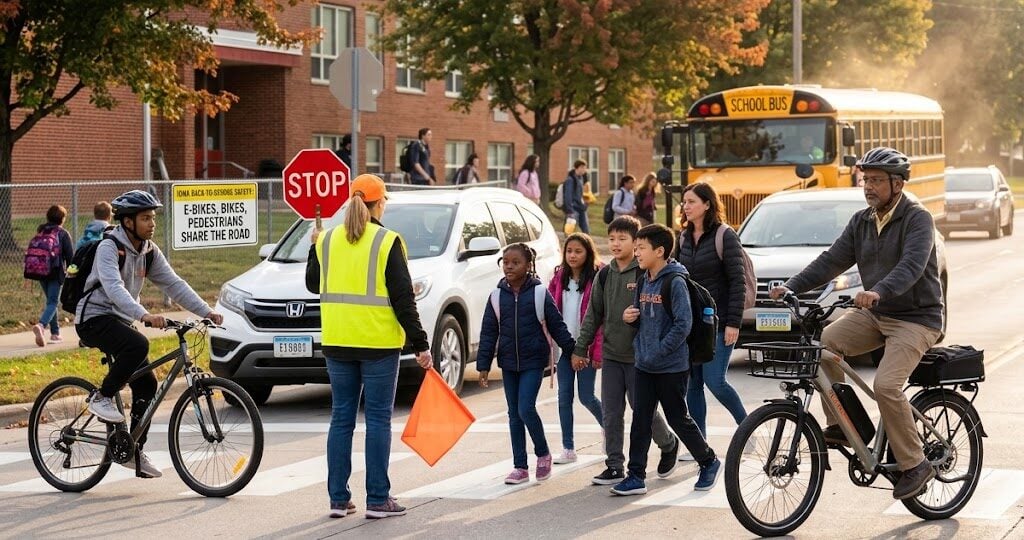
As school buses return to the roads and drop-off lines stretch down the block, prioritizing Iowa back-to-school safety is essential. With kids walking, biking, and riding e-bikes to class amid the usual morning rush, the streets look very different from what they did in July. This shift in traffic means drivers need to share responsibility for slowing down and staying hyper-alert, while pedestrians and cyclists must also stay aware of their surroundings.
Ready to brush up on the rules of the road? The Quad Cities injury attorneys at Winstein, Kavensky & Cunningham have what you need to know to maneuver the back-to-school commute safely.
Iowa Back-to-School Safety Starts with School-Zone Awareness
With the new school year underway, drivers need to be hyper-conscious of their speed in school zones. Posted limits exist for a reason: kids don’t move the way adults expect. If a ball rolls into the street, a seven-year-old will follow it without checking for traffic first. Crossing guards, stopped buses, and cars idling for drop-off all mean the same thing: expect delays and stay alert. Passing a vehicle stopped for children is one of the most dangerous habits drivers fall into when they’re running late.
The Iowa Department of Transportation (Iowa DOT) puts out back-to-school driving reminders every August for exactly this reason. Fortunately, schools participating in Iowa Safe Routes to School programs tend to see fewer close calls once kids learn their routes and drivers know to expect them.
To do your part, put the phone down and give yourself a little extra grace in the morning. Leave ten minutes earlier than you think you need to. A driver with a little breathing room drives much more carefully than one who’s already behind schedule.
Related topic: Back to School Driving: Avoiding School Zone Accidents
Crosswalks and the Right-of-Way
Iowa law requires pedestrians to use marked and unmarked crosswalks where they exist, and it requires drivers to watch for people using them. Unfortunately, drivers skip that second part more often than they should.
Kids easily vanish in the blind spots of modern SUVs and trucks. They move unpredictably and simply can’t judge how fast a vehicle is approaching. Many assume that if they see a car, the driver sees them. A driver locked onto the bumper ahead will miss the student darting out from between parked cars.
Conversely, turning vehicles pose a different threat. Picture a driver waiting to turn right. They stare left for a gap in traffic while letting the car creep forward—straight into the right-hand crosswalk. Add in the thick windshield pillars on most cars, which can completely block a child from view, and the danger multiplies. Glancing once isn’t enough. Take the extra time to come to a full stop, find your gap, and check the crosswalk a second time before moving forward.
Further, never assume a pedestrian sees you coming. Making eye contact helps, but thinking “they saw me” is exactly the kind of assumption that leads to a crash. Back-to-school traffic increases these risky moments, especially near school entrances and busy intersections. Sadly, these preventable mistakes are where our Iowa pedestrian injury lawyers at WKC Law see some of the most serious injuries every fall.
Related topic: Teaching Kids Pedestrian and Bike Safety
Iowa Back-to-School Safety for Bikes and E-Bikes
When approaching a crosswalk or busy intersection, or driving alongside a designated bike lane, drivers need to look twice before turning or crossing a cyclist’s path. The same goes for bicyclists and e-bike riders sharing the road with much larger vehicles. Everyone needs to stay aware of what is happening around them.
Drivers should also check their mirrors and blind spots before opening a door near bike traffic. A door swinging into a cyclist’s path can cause a serious but preventable injury.
E-bikes add another factor: speed. Some can travel much faster than traditional bicycles, making it harder for drivers to judge how quickly a rider is approaching. This matters most at intersections and driveways, where a driver may be preparing to turn or pull into traffic.
Younger riders may face another challenge. Children and teens are still developing the experience and judgment needed to anticipate how drivers will react in different traffic situations. Organizations such as the Iowa Bicycle Coalition teach young riders those skills before they need them in real-world situations.
For drivers, seeing a cyclist is only part of the equation. Anticipating where that cyclist may go next can help prevent a crash. If a collision happens, our Iowa bicycle accident attorneys at WKC Law can help injured riders understand their legal options.
LOCAL BIKING NEWS: In mid-August, a man riding an e-bike in Cedar Rapids died after colliding with a vehicle at the busy intersection of Center Point Road NE and the Highway 100 on-ramp, one of two e-bike deaths in eastern Iowa within the same week.
After a Crash: What Happens Next
When a pedestrian, cyclist, or e-bike rider is hit by a vehicle, sorting out what happens next can be an unwelcome and frustrating task. If physically able, the injured person should document as much as possible, including taking photos of the accident scene and visible injuries, getting witness information, and collecting a police report and medical records.
Medical care, however, should take priority. Even when injuries don’t seem serious immediately, some symptoms may not appear until later. Emergency treatment may be only the beginning. Ongoing medical care, time away from work, reduced earning ability, and the physical and emotional toll of recovery can add up quickly.
If you or someone you love has been injured in this type of crash, our Iowa personal injury attorneys at WKC Law can help you understand what happened, who may be responsible, and what your injuries may mean for a potential claim.
Comparative Fault in Iowa Claims
Crashes involving a pedestrian, cyclist, or e-bike rider aren’t always straightforward. More than one person can contribute to what happened, and insurance companies know it. Insurer claims often argue that an injured pedestrian stepped into the street unexpectedly or that a cyclist failed to signal, to shift blame away from their driver.
Iowa follows a comparative fault system, so if someone is injured in an incident and is also partly responsible for a crash, it doesn’t automatically prevent an injury claim from getting filed. What does change is how much a person can recover, since their share of fault reduces any award. The specific facts of the crash, not assumptions, decide how that plays out.
If an insurance company is pointing fingers at you or someone you love, those allegations need a closer look. Don’t just accept their viewpoint and accept a lowball offer.
Iowa Back-to-School Safety Wrap Up
Iowa back-to-school safety starts with greater awareness. Drivers need to slow down and be vigilant. Parents should walk designated walker-friendly routes with their kids. Cyclists and e-bike riders should wear reflective gear to increase visibility and follow the rules of the road. And everyone – walkers, drivers, and riders alike – needs to pay closer attention near intersections and school zones.
If a serious pedestrian, bicycle, or e-bike crash happens to you or someone you love, the personal injury attorneys at Winstein, Kavensky & Cunningham are ready to help you seek just compensation for your injuries. Get in touch for a free consultation by calling (309) 794-1515, using our LiveChat, or by filling out a contact form.
The information on this blog is for general information purposes only. Nothing herein should be taken as legal advice for any individual case or situation. This information is not intended to create, and receipt or viewing does not constitute an attorney-client relationship.