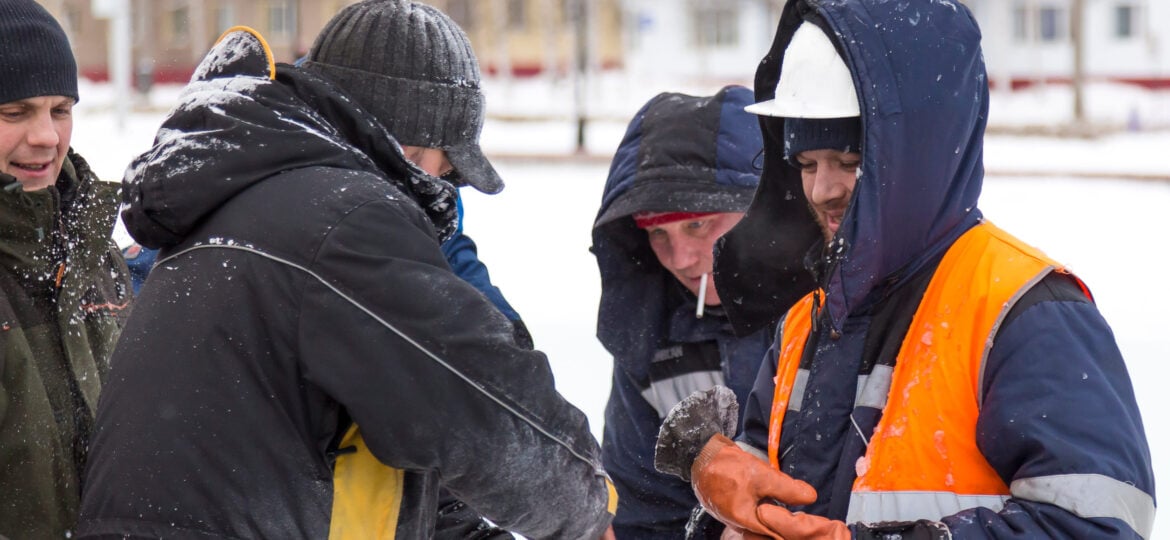
For those of us who work outdoors, cooler weather can make daily tasks harder to complete. Whether you spend your time as a lineman, plowing a parking lot, moving luggage at Quad Cities International Airport, working a farm, or unloading trucks as a warehouse worker with the dock doors open, by lunch your fingers won’t bend right and your footing feels off. Most people shake it off and finish the shift. Sometimes that’s fine. Sometimes it’s the precursor to a workers’ comp claim for cold-weather injuries.
If you suffered cold-weather injuries while working, you may have a workers’ comp claim. Our Quad Cities workers’ compensation attorneys put together the following guide to help you learn more.
Why Cold Weather Injuries Catch People Off Guard
Wind chill at or below 28°F carries a frostbite risk, and at -18°F, frostbite can develop in under 30 minutes, according to OSHA. Also, work gear that keeps you warm can work against you by snagging on equipment or limiting your reach.
That’s why a job that doesn’t seem dangerous can still go wrong. Cold makes small mistakes more likely, and from late fall through early spring, one small slip can turn into a serious injury.
Common Injuries in Workers’ Comp for Cold Weather Injuries Claims
Some cold injuries appear immediately, while others are delayed, with symptoms that appear hours or days later. Here’s what to watch for:
- Frostbite freezes skin and the tissue beneath it, usually in fingers, toes, ears, and the face. Numbness can hide the damage until the area thaws.
- Hypothermia drops your core temperature and slows your thinking and coordination. Treat it as an emergency, even if you feel fine at first.
- A slip, trip, or fall on an icy dock plate or loading ramp can break a wrist, hip, or skull.
- Slick roads and poor visibility make vehicle and equipment accidents more likely.
- Cold muscles stiffen and respond more slowly. A twist or heavy lift that’s routine in summer can strain or tear something in winter.
Whether the injury is obvious, reporting it early matters. Delayed symptoms can be harder to connect to work later, so write down what you were doing and when it started.
Warning Signs Workers Shouldn’t Ignore
Your body usually sends signals before a cold injury gets serious. Numbness and tingling are early signs, as are fingers or toes that look pale, waxy, or gray. Uncontrollable shivering, confusion, slurred speech, or unusual sleepiness can mean hypothermia, which needs medical care right away. The NIOSH cold stress guidance lists these symptoms and recommends getting out of the cold as soon as they appear.
If you notice any of these symptoms, you should get indoors to warm up and tell your supervisor before you go back out.
Employer Duties in Workers’ Comp for Cold Weather Injuries
Employers are expected to keep outdoor crews from getting too cold. That usually means a heated place to warm up, weather-appropriate gear, and a schedule that changes when the wind picks up. OSHA’s cold-stress guidance spells out what those protections look like.
If a supervisor tells you to push through symptoms, or waves off a cold injury as “just typical winter conditions,” don’t drop it. Note who said it and when, then report the injury in writing.
Can You Get Workers’ Comp for Cold Weather Injuries?
Often, yes. Workers’ comp for cold-weather workplace injuries generally follows the same rules as other work incident injuries. In Iowa and Illinois, workers’ compensation covers injuries that happen while you’re doing your job, including injuries caused by cold, ice, or wet surfaces. Depending on the injury, that can mean medical care and wage replacement if you’re off work.
Whether your claim qualifies depends on your job duties, when the injury happened, and how quickly you reported it. An insurer may argue the cold didn’t cause the problem, or that you reported it too late. Written documentation best counters both arguments.
What to Do If You Get Hurt on a Cold Shift
Get to a doctor first, even if the injury feels small. Cold injuries can look minor on the surface and get worse overnight. Once you’ve been seen, report the injury to your employer in writing. A text or email is fine, as long as it includes a date.
Also gather everything that supports the incident and related injuries, such as discharge papers, work schedules, and any injury documentation. If your claim is ever challenged, those records will matter more than your recollection.
Early reporting protects your workers’ comp claim for cold weather injuries. Delays are one of the easiest things for an insurer to use against you. Our guide on what to do after a workplace injury walks through those first steps in more detail.
Workers’ Comp for Cold Weather Injuries FAQs
Retaliation for a valid claim is generally prohibited in both Iowa and Illinois, but the details depend on your situation. If you’re disciplined, demoted, or fired after reporting an injury, talking with am experienced workplace accidents attorney as soon as possible is key to protecting your best interests.
It depends on your situation. Often, your employer or its insurer can direct your first medical care. In some cases, you may have more say in who treats you. Either way, ask questions early and keep a record of every visit and every recommendation the doctor makes.
Call Our Quad Cities Workers’ Compensation Lawyers
Cold-weather injuries are easy to dismiss, which is exactly why they cause problems later. If your claim gets denied, your employer discourages you from reporting, or your injury keeps you off the job, contact a local work injury lawyer for a free consultation.
Our attorneys at Winstein, Kavensky & Cunningham have more than 120 years of combined experience helping injured workers across the Quad Cities. We serve clients in Rock Island, Henry, Mercer, Whiteside, and Knox counties in Illinois, and Scott, Clinton, Muscatine, Cedar, and Jackson counties in Iowa.
Call (309) 794-1515, connect through LiveChat, or share your contact information through a confidential online form. As time limits apply for these types of injuries, don’t delay getting the help and answers you need.
The information on this blog is for general information purposes only. Nothing herein should be taken as legal advice for any individual case or situation. This information is not intended to create, and receipt or viewing does not constitute an attorney-client relationship.