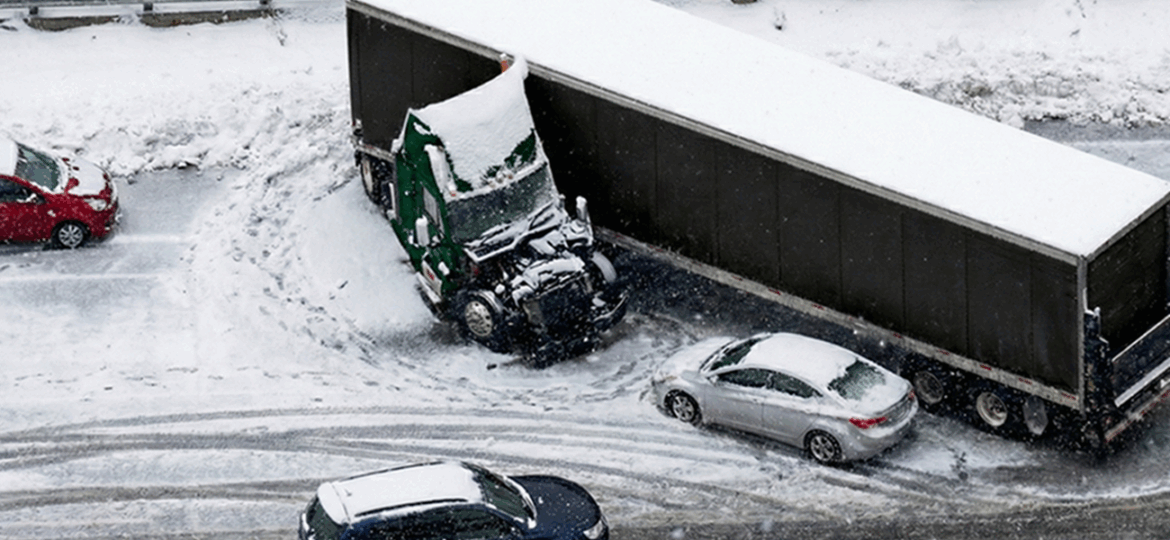
AI-generated Image
Winter in the Quad Cities brings more than cold temperatures and holiday traffic—it also marks one of the most dangerous seasons for semi-truck crashes. Among the most serious winter trucking incidents are jackknife accidents, where a semi’s trailer swings out at a sharp angle, resembling a folding pocketknife. These crashes often block multiple lanes, cause significant pileups, and leave victims with severe injuries. If you’re driving on I-88, I-74, I-280, or nearby roads this December, knowing why a jackknife truck accident can happen and how to avoid them could make all the difference in staying safe.
Let’s break down why these accidents happen and what drivers can do to prevent them this winter.
Why Truck Accident Risks Increase in Winter
A jackknife truck accident typically occurs when a semi loses traction. Snow, sleet, black ice, and sudden temperature drops make the Quad Cities interstates especially hazardous during December. Even minor slick spots on bridges and ramps can cause a trailer to slide out of alignment.
Semis have much longer stopping distances than passenger vehicles. When a driver brakes too hard or too quickly on icy pavement, the trailer can skid and swing outward. Combine that with winter wind gusts, heavy holiday traffic, or improperly secured cargo, and a routine trip along I-74 or I-88 can escalate into a devastating accident within seconds.
High-Risk Jackknife Truck Accident Areas on I-88, I-74, and I-280
Locals know that winter conditions change rapidly along Quad Cities roadways. Semi drivers, however, face extra risks in certain overlooked areas, such as:
Bridges and Overpasses:
These freeze first, especially on stretches of I-88 and the river-adjacent segments of I-74.
Ramps and Merges:
I-280’s curved ramps are notorious for slick spots that increase jackknife risk.
Long, Open Stretches:
Gusty winds on rural sections of I-88 or I-74 can destabilize trailers already struggling for traction.
Shaded Road Sections: Hidden Ice Leading to Jackknife Truck Accidents
Areas that never receive direct sunlight often harbor black ice throughout the day.
Any of these hazards can lead to a jackknife event if a truck driver is traveling too fast, following too closely, or failing to adjust to winter weather.
Preventing a Winter Jackknife Truck Collision
The reality is that most winter-related jackknife crashes are preventable with proper training and safe winter driving behavior. Commercial drivers are expected—and federally required—to adjust their driving to match weather and road conditions.
Effective jackknife truck accident prevention includes:
- Slowing down significantly in icy or snowy conditions
- Avoiding sudden braking, especially on ramps and bridges
- Increasing following distances
- Completing winter-specific pre-trip inspections
- Ensuring cargo is secured correctly and balanced
- Stopping entirely when conditions become unsafe
Federal regulations even require truck drivers to stop driving if weather conditions make the roadway too dangerous. Failure to do so may constitute negligence.
When a Jackknife Truck Accident Leads to Injury
Jackknife accidents often result in multi-vehicle collisions, rollovers, and catastrophic injuries. Related injuries can lead to costly medical bills, lost wages, long-term treatment needs, and emotional trauma.
When a truck jackknifes, several parties may be held liable, including:
- The truck driver
- The trucking company
- Cargo loaders
- Maintenance providers
A thorough investigation is essential to uncover the root cause—whether it’s speeding, poor maintenance, hours-of-service violations, or inadequate driver training.
Related topic: Iowa and Illinois Truck Driver Laws Explained
Injured in a Winter Truck Accident? Call WKC Law for Help
If you or a loved one was hurt in a semi-truck jackknife crash on I-88, I-74, I-280, or anywhere in the Quad Cities, you don’t have to navigate the aftermath alone.
For more than 60 years, Winstein, Kavensky & Cunningham have helped injury victims across the Quad Cities. Our team has represented clients throughout Rock Island, Henry, Mercer, Whiteside, and Knox counties in Illinois, as well as Scott, Clinton, Muscatine, Cedar, and Jackson counties in Iowa.
Contact us today to see why we’re recognized as a leading personal injury law firm in the Quad Cities. Call (309) 794-1515, connect through LiveChat, or complete our free consultation form to get started today.
The information on this blog is for general information purposes only. Nothing herein should be taken as legal advice for any individual case or situation. This information is not intended to create, and receipt or viewing does not constitute an attorney-client relationship.